
Home / Services
Philadelphia planning guide
Portable Toilets for Weddings and Private Gatherings
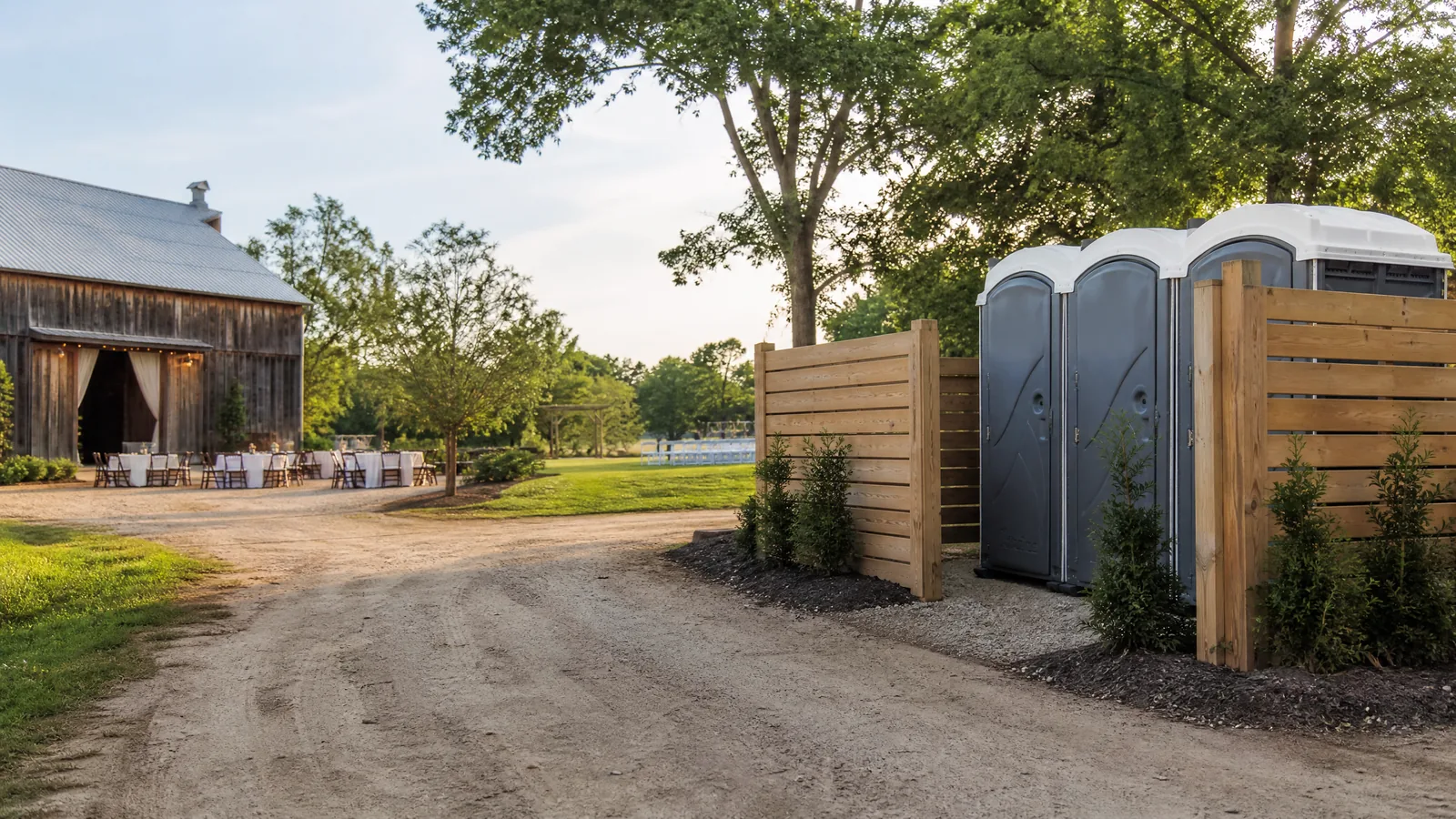
A wedding, family celebration, reunion, or backyard gathering may have a carefully arranged tent, lawn, driveway, or garden but not enough permanent restroom capacity for every guest. A temporary unit can be incorporated into the property plan with attention to privacy, guest movement, landscaping, and the tone of the occasion.
Call (267) 754-4261Protect the guest experience
Choose a location that is easy to reach without making the restroom the visual center of the celebration. Consider the path from the tent or main gathering area, the needs of older guests and children, evening lighting, and the distance from food preparation. Avoid narrow routes, soft ground that may become difficult after rain, and places where doors would open into a service corridor or seating area.
Coordinate with tents, décor, and vendors
Finalize the restroom area before décor, rental furniture, generators, catering equipment, and temporary fencing are placed. Share the event sketch with the property owner, planner, caterer, and rental provider so the approach remains open. If the celebration uses a private residence, identify the gate, driveway width, turning conditions, and any landscaping or surface concerns that could affect access.
Include accessibility and handwashing early
A polished event plan is also an inclusive one. If an accessible unit is needed, provide a firm, unobstructed approach and enough surrounding clearance for use. A handwashing station may be helpful near shared food or beverage service, but it should not interfere with catering flow or create a bottleneck at the tent entrance.
Keep expectations realistic
The supplier can discuss available options after learning the date, site, user group, duration, and access conditions. Do not publish assumptions about luxury features, delivery timing, pricing, or a particular unit type until those details are confirmed for the specific event.
Frequently asked questions
Protect the guest experience
Choose a location that is easy to reach without making the restroom the visual center of the celebration. Consider the path from the tent or main gathering area, the needs of older guests and children, evening lighting, and the distance from food preparation. Avoid narrow routes, soft ground that may become difficult after rain, and places where doors would open into a service corridor or seating area.
Coordinate with tents, décor, and vendors
Finalize the restroom area before décor, rental furniture, generators, catering equipment, and temporary fencing are placed. Share the event sketch with the property owner, planner, caterer, and rental provider so the approach remains open. If the celebration uses a private residence, identify the gate, driveway width, turning conditions, and any landscaping or surface concerns that could affect access.
Include accessibility and handwashing early
A polished event plan is also an inclusive one. If an accessible unit is needed, provide a firm, unobstructed approach and enough surrounding clearance for use. A handwashing station may be helpful near shared food or beverage service, but it should not interfere with catering flow or create a bottleneck at the tent entrance.
Keep expectations realistic
The supplier can discuss available options after learning the date, site, user group, duration, and access conditions. Do not publish assumptions about luxury features, delivery timing, pricing, or a particular unit type until those details are confirmed for the specific event.
Plan the next step
Share the date or project phase, intended users, approximate duration, placement area, access conditions, accessibility needs, and handwashing preferences, then request a conversation about the appropriate setup for your Philadelphia-area site.
Request a conversation