
Home / Services
Philadelphia planning guide
Portable Toilets for Philadelphia Events and Festivals
A successful outdoor event gives guests a clear path from arrival to activity, food, seating, and departure. Temporary restrooms are one part of that path, and their placement should be considered alongside entrances, queues, stages, vendor areas, and staff operations. Philadelphia events can take place in parks, plazas, private grounds, streets, and special venues, so the most useful plan is the one built around the actual site rather than a one-size-fits-all assumption.
Call (267) 754-4261Start with the event map
Mark the primary entrance, accessible route, food and beverage areas, seating, entertainment, staff-only zones, and any location where a service vehicle may need to reach the site. A restroom area should be visible enough for guests to find but not positioned where its approach cuts through a stage queue or dining line. Keep units on a stable surface, leave room around doors, and consider lighting if the event continues after dark.
Think in terms of peaks, not only totals
Attendance is not evenly distributed. Opening periods, intermissions, meal breaks, and headline performances can create short periods of concentrated demand. Share the expected attendance, event duration, audience profile, and peak schedule during planning. If vendors, performers, volunteers, or staff use separate areas, explain that distinction so the sanitation plan reflects how the site will actually operate.
Pair facilities with hygiene planning
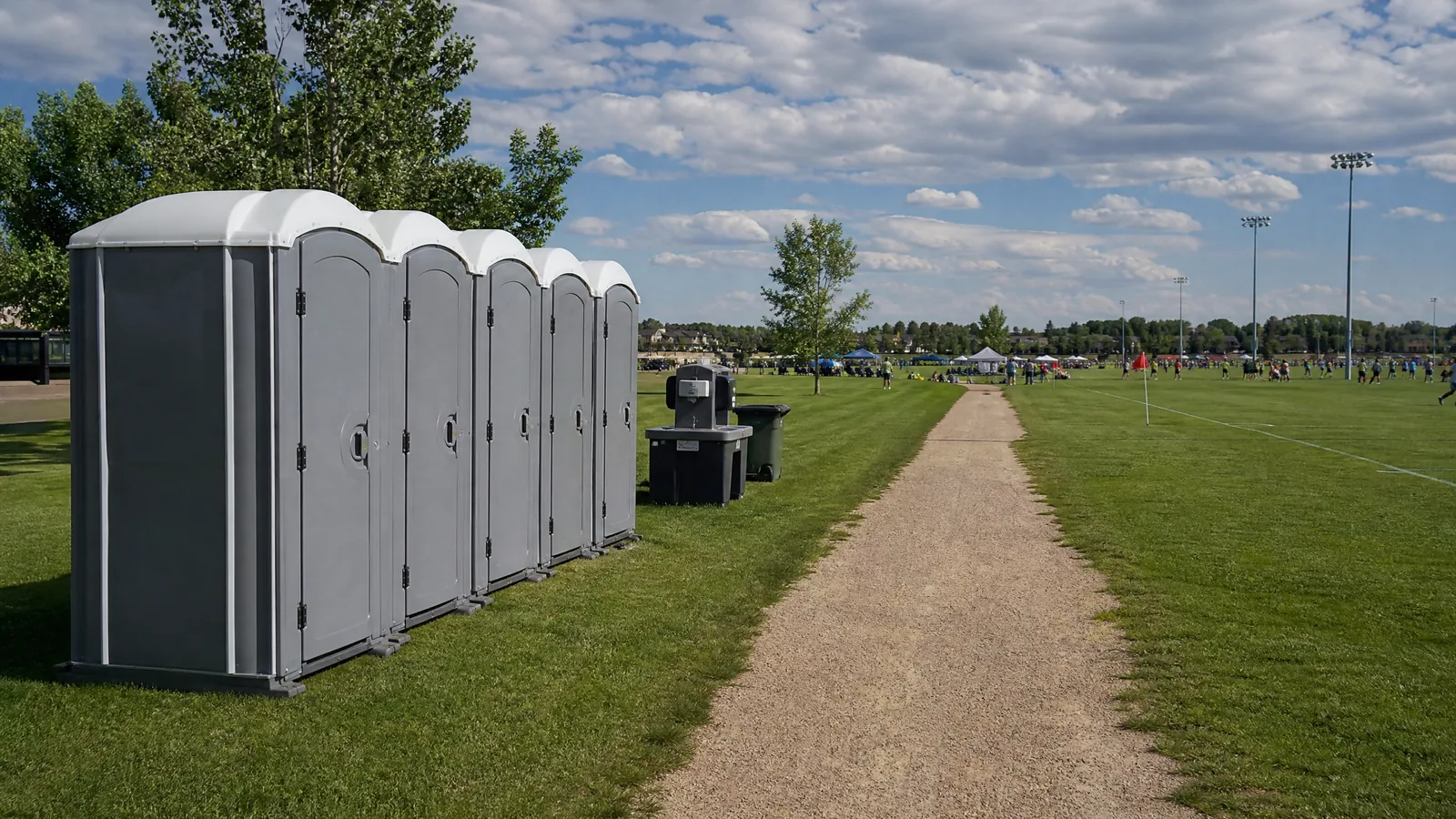
Where food is prepared or served, a handwashing station may complement the restroom layout. Place it where guests can recognize it and where use does not create a conflict with vendor operations or accessible routes. If the event has children, older adults, or guests with mobility needs, discuss an accessible unit and a firm, unobstructed approach before tables, cords, barricades, and décor are installed.
Coordinate with the venue and property team
Ask who approves the placement, who controls gates, and what surfaces or access lanes are permitted. A park, private venue, street closure, or institutional site may have its own rules. The organizer should also confirm whether the event requires separate permits, traffic controls, lighting, or waste-management arrangements; this page does not make permit or compliance determinations.
Frequently asked questions
Start with the event map
Mark the primary entrance, accessible route, food and beverage areas, seating, entertainment, staff-only zones, and any location where a service vehicle may need to reach the site. A restroom area should be visible enough for guests to find but not positioned where its approach cuts through a stage queue or dining line. Keep units on a stable surface, leave room around doors, and consider lighting if the event continues after dark.
Think in terms of peaks, not only totals
Attendance is not evenly distributed. Opening periods, intermissions, meal breaks, and headline performances can create short periods of concentrated demand. Share the expected attendance, event duration, audience profile, and peak schedule during planning. If vendors, performers, volunteers, or staff use separate areas, explain that distinction so the sanitation plan reflects how the site will actually operate.
Pair facilities with hygiene planning
Where food is prepared or served, a handwashing station may complement the restroom layout. Place it where guests can recognize it and where use does not create a conflict with vendor operations or accessible routes. If the event has children, older adults, or guests with mobility needs, discuss an accessible unit and a firm, unobstructed approach before tables, cords, barricades, and décor are installed.
Coordinate with the venue and property team
Ask who approves the placement, who controls gates, and what surfaces or access lanes are permitted. A park, private venue, street closure, or institutional site may have its own rules. The organizer should also confirm whether the event requires separate permits, traffic controls, lighting, or waste-management arrangements; this page does not make permit or compliance determinations.
Plan the next step
Share the date or project phase, intended users, approximate duration, placement area, access conditions, accessibility needs, and handwashing preferences, then request a conversation about the appropriate setup for your Philadelphia-area site.
Request a conversation