
Home / Services
Philadelphia planning guide
Portable Toilets for Parks, Trails, and Outdoor Programs
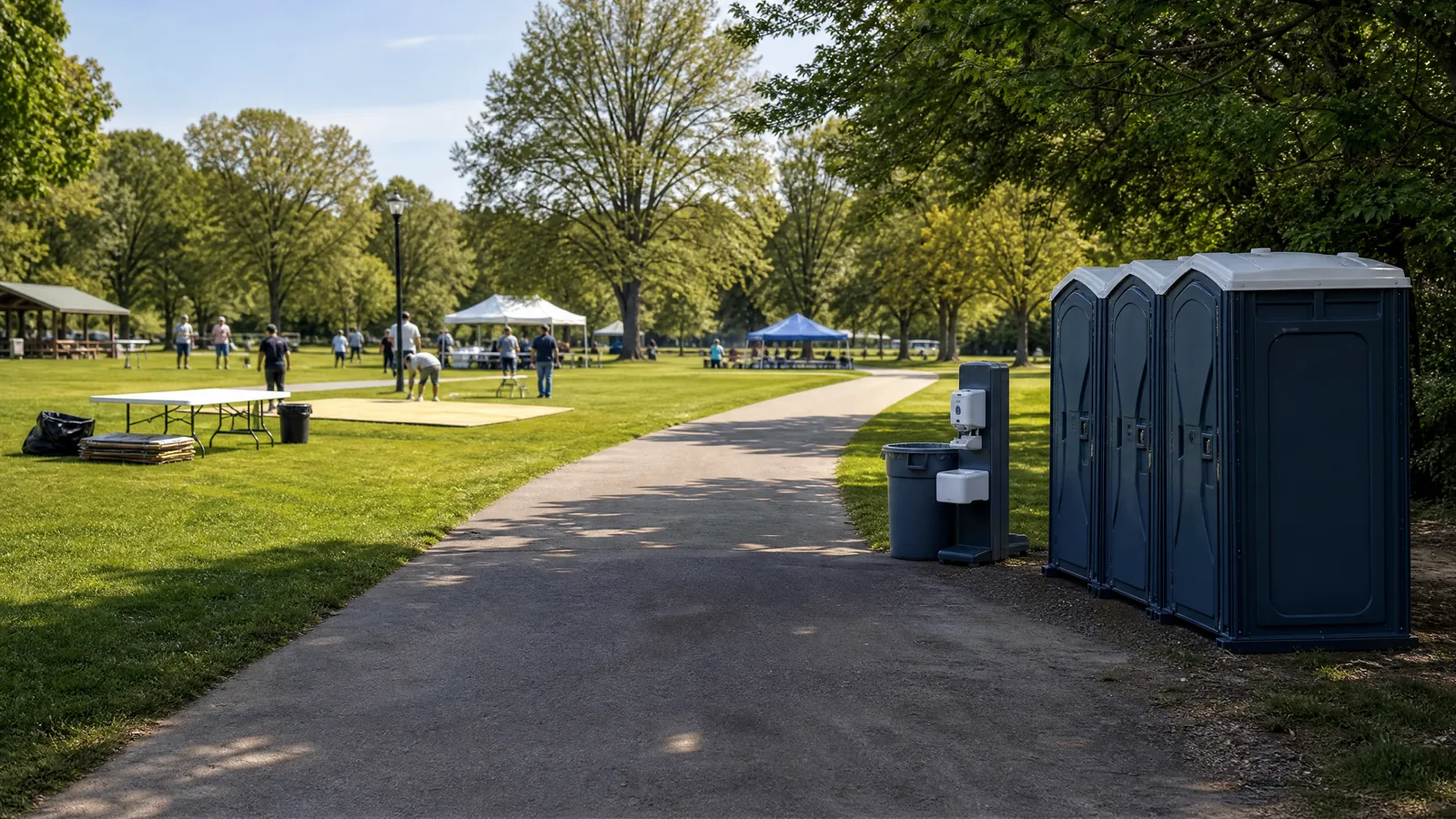
Outdoor programs ask people to move through a landscape rather than a conventional building. A park event, trail activity, community garden program, sports gathering, or waterfront day may involve grass, pavement, paths, gates, slopes, trees, and shared public space. Temporary sanitation works best when it is planned with the landscape and the public route in mind.
Call (267) 754-4261Begin with the permitted footprint
Identify the event boundary, approved access point, pedestrian routes, gathering areas, and any locations that should remain clear. Ask the venue or managing organization where temporary equipment may be placed. The site team should also confirm any applicable permit, protection, or environmental requirements; this content does not make those determinations.
Make the approach usable
Choose a level or appropriately firm location and keep the path free of guy lines, cords, tables, bikes, sports equipment, and temporary signs. An accessible unit needs an especially careful approach, with enough room for maneuvering and no avoidable barriers. If the program runs into the evening, discuss lighting and wayfinding without placing fixtures where they create glare or trip hazards.
Respect shared outdoor space
A public park or trail may remain active beyond the event itself. Place facilities so they do not unnecessarily narrow a path, block a launch or gate, interfere with maintenance access, or sit beside a food-preparation area. Use clear, simple signs to help guests find the facilities while preserving the character of the site.
Prepare for changing ground conditions
Weather can affect grass, soil, gravel, and unpaved access. Tell the rental provider what the surface is like and whether vehicles must use a narrow lane, gate, or shared driveway. If the event footprint changes after rain or construction, revisit the placement instead of relying on the original sketch.
Frequently asked questions
Begin with the permitted footprint
Identify the event boundary, approved access point, pedestrian routes, gathering areas, and any locations that should remain clear. Ask the venue or managing organization where temporary equipment may be placed. The site team should also confirm any applicable permit, protection, or environmental requirements; this content does not make those determinations.
Make the approach usable
Choose a level or appropriately firm location and keep the path free of guy lines, cords, tables, bikes, sports equipment, and temporary signs. An accessible unit needs an especially careful approach, with enough room for maneuvering and no avoidable barriers. If the program runs into the evening, discuss lighting and wayfinding without placing fixtures where they create glare or trip hazards.
Respect shared outdoor space
A public park or trail may remain active beyond the event itself. Place facilities so they do not unnecessarily narrow a path, block a launch or gate, interfere with maintenance access, or sit beside a food-preparation area. Use clear, simple signs to help guests find the facilities while preserving the character of the site.
Prepare for changing ground conditions
Weather can affect grass, soil, gravel, and unpaved access. Tell the rental provider what the surface is like and whether vehicles must use a narrow lane, gate, or shared driveway. If the event footprint changes after rain or construction, revisit the placement instead of relying on the original sketch.
Plan the next step
Share the date or project phase, intended users, approximate duration, placement area, access conditions, accessibility needs, and handwashing preferences, then request a conversation about the appropriate setup for your Philadelphia-area site.
Request a conversation